Two minerals, two short labels, and a lot of questions. This guide explains zinc and chromium: what they are, which everyday foods contain them and what the authorised claims actually say.
Zinc and chromium are the two minerals in GLP5 GLT, a food supplement taken as one capsule a day. You can see the whole label on the GLP5 GLT home page. Here we go through the minerals one at a time, in the order most people ask about them.
What are zinc and chromium?
Both are essential trace minerals. Essential means the body needs them and cannot make them, so they have to come from food or supplements. Trace means the amounts are small, measured in milligrams for zinc and micrograms for chromium. A microgram is a thousandth of a milligram, which is why chromium is written as 40 µg, not 0.04 mg.
They are not vitamins. They are minerals, and that matters for labels: the nutrient reference value (NRV) applies only to vitamins and minerals, so zinc and chromium are the two lines in GLP5 GLT with a percentage next to them.
| Mineral | Form in GLP5 GLT | Per capsule | NRV | % of NRV |
|---|---|---|---|---|
| Zinc | Zinc citrate | 15 mg | 10 mg | 150% |
| Chromium | Chromium picolinate | 40 µg | 40 µg | 100% |
What does zinc contribute to?
Zinc has several authorised health claims. For a food supplement that supplies a meaningful amount, the wording that applies to GLP5 GLT is:
- Zinc contributes to normal macronutrient metabolism.
- Zinc contributes to the normal metabolism of carbohydrates.
- Zinc contributes to the normal metabolism of fatty acids.
- Zinc contributes to the normal function of the immune system.
- Zinc contributes to the protection of cells from oxidative stress.
The exact wording matters, and so does the order of the words. A claim says what zinc contributes to as part of normal body function. It does not promise a particular result for any one person.
Which foods contain zinc?
Zinc is easier to find in a normal British or Irish diet than people expect. Common sources include:
| Food | Why it features |
|---|---|
| Beef, lamb and pork | Red meat is a classic source, from a Sunday roast to Irish stew |
| Shellfish: crab, mussels, oysters | Oysters are among the richest foods for zinc |
| Cheddar and other hard cheeses | A sandwich staple on both islands |
| Pumpkin seeds | Easy to scatter over porridge or salad |
| Oats and wholemeal bread | Think porridge and brown soda bread |
| Lentils, chickpeas and baked beans | Plant sources, though zinc from plants is absorbed less easily |
People who eat little or no meat can still reach the 10 mg NRV with a mix of seeds, wholegrains, pulses and dairy, but the plant sources need a little more planning. That is a good topic to raise with a pharmacist or dietitian if you follow a vegan or vegetarian diet.
What does chromium contribute to?
Chromium has two authorised claims, and both are short:
- Chromium contributes to normal macronutrient metabolism.
- Chromium contributes to the maintenance of normal blood glucose levels.
Macronutrients are the big three in food: carbohydrate, protein and fat. Chromium is one of the minerals involved in how the body deals with them. The second claim refers to maintaining normal blood glucose levels, which is a normal part of everyday body function. It does not describe treating any condition, and it is not a reason to change medication.
Which foods contain chromium?
Chromium is present in many foods in very small amounts, and the content varies with the soil and how food is processed. Typical sources include:
- Broccoli and other green vegetables.
- Wholegrain bread and cereals, including oats.
- Potatoes, which are a regular on both British and Irish plates.
- Meat, eggs and some seafood.
- Some fruit and spices, such as apples, bananas and black pepper.
Because amounts are tiny and vary so much, a food label rarely states chromium. A supplement label does, which is why the 40 µg line in GLP5 GLT is easy to read and compare.
What does NRV mean on the label?
NRV stands for nutrient reference value. It is a benchmark amount of a vitamin or mineral used on labels in the UK and the EU, so that people can compare products at a glance. For zinc the NRV is 10 mg and for chromium it is 40 µg.
It is a labelling tool, not a target you must hit every day, and it is not a recommended maximum. One GLP5 GLT capsule provides 150% of the zinc NRV and 100% of the chromium NRV. Anything you eat and drink that day adds to those figures.
Why is zinc 150% and chromium 100%?
A capsule has limited room, and the amounts are chosen so that each mineral reaches a meaningful level for its authorised claims. Zinc citrate provides 15 mg. Chromium picolinate provides 40 µg, exactly the NRV. The form matters only for the label: citrate and picolinate are the compounds in which the mineral is bound so that it can be added to a capsule in a stable way.
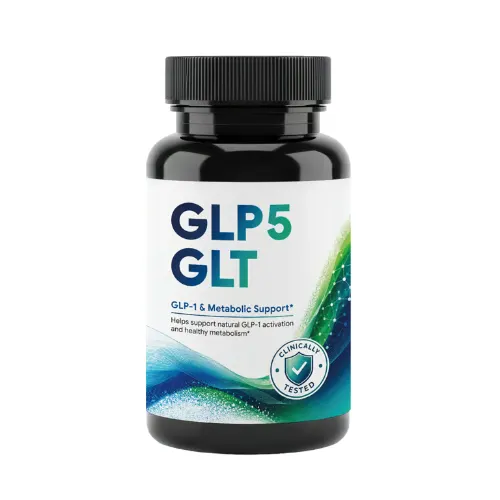
Zinc and chromium in one daily capsule
See the GLP5 GLT offer Food supplement for adults 18+. Not a substitute for a varied, balanced diet and a healthy lifestyle. One capsule a day; do not exceed it.Can I get enough zinc and chromium from food alone?
Many people with a varied diet get most of what they need from food, and the best place to start is the plate. A supplement is a way to complement a normal diet, not to replace it. Plenty of people take one when their routine is irregular: long shifts, a lot of meals on the go, or a stretch of eating less variety than usual.
To picture a day, here is a simple example for someone in Manchester or Cork:
- Breakfast: porridge with pumpkin seeds.
- Lunch: a cheddar and tomato sandwich on wholemeal bread, and an apple.
- Dinner: beef stew with potatoes and broccoli.
That day already includes decent sources of both minerals. The capsule then sits on top of an existing diet, which is a good reason to count the total and not to stack several zinc products.
How much zinc is too much?
NHS advice says that 25 mg or less of zinc a day from supplements is unlikely to cause harm. One GLP5 GLT capsule has 15 mg, so there is limited room left for other zinc supplements. Check the label of any multivitamin, lozenge or hair, skin and nails product you already take, and add the zinc lines together. Our safety and suitability guide has a short table showing how it adds up.
Who should check before taking zinc and chromium?
As with every supplement, a quick chat with your GP or pharmacist is a good idea if you:
- take medication, especially for blood sugar,
- are pregnant, trying for a baby or breastfeeding,
- have a medical condition,
- already take other mineral supplements.
GLP5 GLT is for adults aged 18 and over. It also contains guarana, which naturally contains caffeine, so it is worth thinking about the caffeine in your day too.
How does this fit with the rest of GLP5 GLT?
Zinc and chromium are the two ingredients with authorised claims. The other five are L-arginine, apple cider vinegar extract, guarana extract, L-glutamine and L-leucine. They are described for what they are and where they come from, with no health claims. If you want to read about them, see the apple cider vinegar capsules guide and the amino acids guide.
The routine itself is simple: one capsule a day, swallowed whole with two large glasses of water, 15 to 30 minutes before or during lunch or dinner. Keep the pack closed in a cool, dry place, away from children. A food supplement should never replace a varied, balanced diet and a healthy lifestyle.
Frequently asked questions
What does zinc do in GLP5 GLT?
Zinc contributes to normal macronutrient metabolism, to the normal metabolism of carbohydrates and fatty acids, to the normal function of the immune system and to the protection of cells from oxidative stress. One capsule has 15 mg, which is 150% of the nutrient reference value.
What does chromium do in GLP5 GLT?
Chromium contributes to normal macronutrient metabolism and to the maintenance of normal blood glucose levels. One capsule has 40 micrograms, which is 100% of the nutrient reference value.
Which foods are rich in zinc?
Meat, shellfish such as crab and oysters, hard cheeses like cheddar, pumpkin seeds, oats, wholemeal bread and pulses all contain zinc.
Which foods contain chromium?
Broccoli, wholegrain cereals, potatoes, meat, eggs and some fruit and spices contain small amounts of chromium. The content varies, so food labels rarely state it.
What is the difference between zinc citrate and zinc oxide?
They are different compounds used to supply the mineral. GLP5 GLT uses zinc citrate, and the label lists the elemental zinc amount, 15 mg per capsule.
Can I take a zinc and chromium supplement every day?
GLP5 GLT is designed for one capsule a day. The NHS says 25 mg or less of zinc a day from supplements is unlikely to cause harm, so count any other zinc products you take and ask your pharmacist if you are unsure.
More guides
Last reviewed 20 October 2026. This guide is general information about a food supplement.